

专访 Kudsi Erguner | 演奏者的心境与精神远比乐器重要
2026-5-15

在过去十二年间,明天音乐节已发展成为深圳重要的实验和前卫音乐平台之一,始终致力于支持那些游离于主流之外的艺术家。而在今年,UPEE 与明天音乐节进行合作,我们将在接下来的更新中与本届明天音乐节阵容中的五组音乐人进行专访。
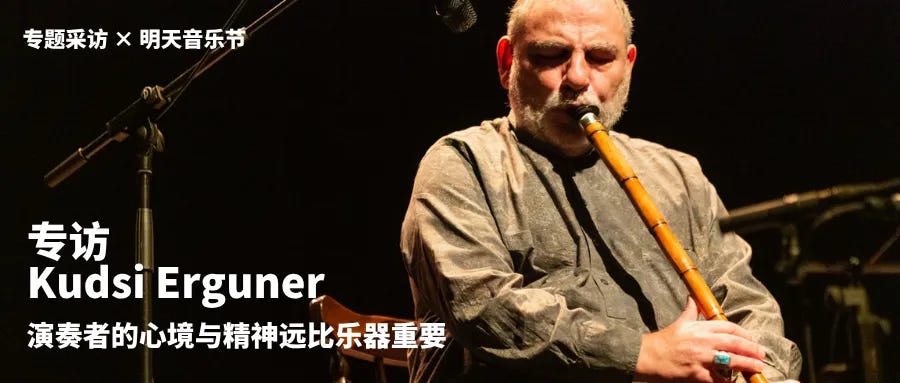
当代最杰出的奈伊笛(Ney)大师 Kudsi Erguner 毕生致力于古老音乐遗产在当代的延续,在东西方音乐交汇的语境中推动奥斯曼古典音乐和传统音乐的复兴,为世界音乐作出了权威性的贡献。他的音乐并非表层的拼贴、挪用,而是坚守互通互融而不失本真的创作之道,通过质朴无华但却扎实饱满的演奏,让有历史渊源的文明发声。此次受邀来到深圳,他将把跨越世纪的古老笛声带到明天音乐节的现场。UPEE 有幸邀请 Kudsi Erguner 进行专访,聆听这位音乐哲人关于传统、融合、乐器与文化对话的深邃思考。
UPEE:您1999年发布的《Ottomania》令人印象深刻,它是你组建 The Kudsi Erguner Ensemble 之后致力于复兴 16 世纪奥斯曼帝国古典乐以来的一个阶段性成果,于现在来看非常具有“将古老、被遗忘的音乐融汇于当下的创作”的质感。26 年后的现在,有什么样的来自更当下的声音、风格或者创作思路是你觉得有兴趣在之后进行类似的融合尝试的?
Kudsi:感谢你对我的专辑给予如此中肯的赞誉。
正如你所留意到的,我的创作工作分为两个方向——一方面,复兴那些遭到不公冷落的音乐遗产,并赋予其现代的表达;另一方面,让这些古老音乐在当代艺术领域获得应有的位置。这也促使我不断与不同文化背景的音乐人展开合作。
谈及音乐融合,大众往往会刻板认为,就是将非欧洲音乐、传统乐器与爵士乐或古典音乐进行简单拼接。
而我更希望促成本就拥有历史渊源的音乐传统之间的碰撞与融合。比如将奥斯曼音乐,与印度、波斯乃至中国的音乐进行对话。
除此之外,我也热衷于探索不同文化中,具备灵性修行、冥想特质的音乐传统之间的融合创作。
我近期正在推进的全新融合项目,围绕哲人及灵性导师 George Ivanovich Gurdjieff 的相关音乐展开,他的思想深刻影响了众多欧洲艺术家。
目前我正在筹备系列音乐会,集结音色特质相近的东西方乐器同台对话:古筝与卡农琴、二胡与克曼切琴、笛子与奈伊笛。我任教于鹿特丹艺术大学科达茨音乐学院,已和中国优秀的二胡演奏家孙铮有过愉快合作,我也计划将二胡融入今后的音乐会演出之中。
Thank you for your kind compliments regarding my albums.
As you have noticed, my work consists, on the one hand, in reviving a musical heritage that has been unjustly neglected, with a view to modernizing it, on the other hand in giving it the place it deserves in contemporary musical art. This also leads me to collaborate with artists from diverse backgrounds.
When we think of the idea of musical fusion, we often imagine a blend between non-European music’s and instruments with the worlds of jazz or classical music.
I would also like to create encounters and fusions between musical traditions that already share a historical connection. For example, the music of the Ottoman world with the music of India, Persia or China
Beyond that, I am interested in creating fusions between musical traditions that also share a sacred or meditative function across different cultures.
The latest fusion project I have been developing focuses on the music associated with the philosopher and spiritual teacher George Ivanovich Gurdjieff, whose ideas have influenced many European artists.
I am currently working on organizing a series of concerts that bring together instruments with similar tonal qualities, such as the Guzheng and Kanun, the Erhu and Kamancheh, and the Dizi and Ney. At the Codarts University of the Arts conservatory of Rotterdam , where I teach, I have already had the pleasure of working with a Chinese student, Sun Zheng, an outstanding erhu player, and I have sought to incorporate this instrument into my concerts.
UPEE:你的成长经历与土耳其的本土音乐类型相伴,与此同时你也有对印度和巴基斯坦音乐深有研究,你会如何形容三地音乐在声音、表达等层面的不同,它们各自对你而言最具魅力的部分是否也各有区别呢?
Kudsi:穆斯林世界不同地区的苏菲社群,都会依托本土语言与文化来表达自身精神内核。尽管其修行准则、教义与祷颂内核一脉相承,但每个地域都发展出了独属于自身的音乐文脉,形成丰富多元的传承体系。
譬如,卡瓦利吟唱传统在 15 世纪前曾安纳托利亚盛行,后来我在巴基斯坦再度发现这一已然大众化的古老形式,倍感欣喜。借着研究契机,我结识了 Nusrat Fateh Ali Khan,也有幸促成他到访巴黎演出,将其音乐引入欧洲视野,我们也成为至交好友。即便他的音乐根植于印巴传统,但所吟唱的诗人作品、诗歌主旨与精神内核,与安纳托利亚苏菲文化都是相通的。
Sufi communities in different parts of the Muslim world have expressed themselves through the languages and cultures of the countries in which they are found. Although their principles, teachings, and prayers remain the same, each region has developed its own unique heritage, creating a rich and diverse tradition.
For example, the tradition of Qawwali existed in Anatolia until the 15th century, and I was delighted to rediscover this tradition in Pakistan in its highly popularized form. My research led me to meet Nusrat Fateh Ali Khan, and I had the honor of helping arrange his visit to Paris in order to introduce him to Europe. We became very close friends. Even though his music was rooted in the Indo-Pakistani tradition, the poets whose works were sung were the same, and the themes and content of his poems were also the same.
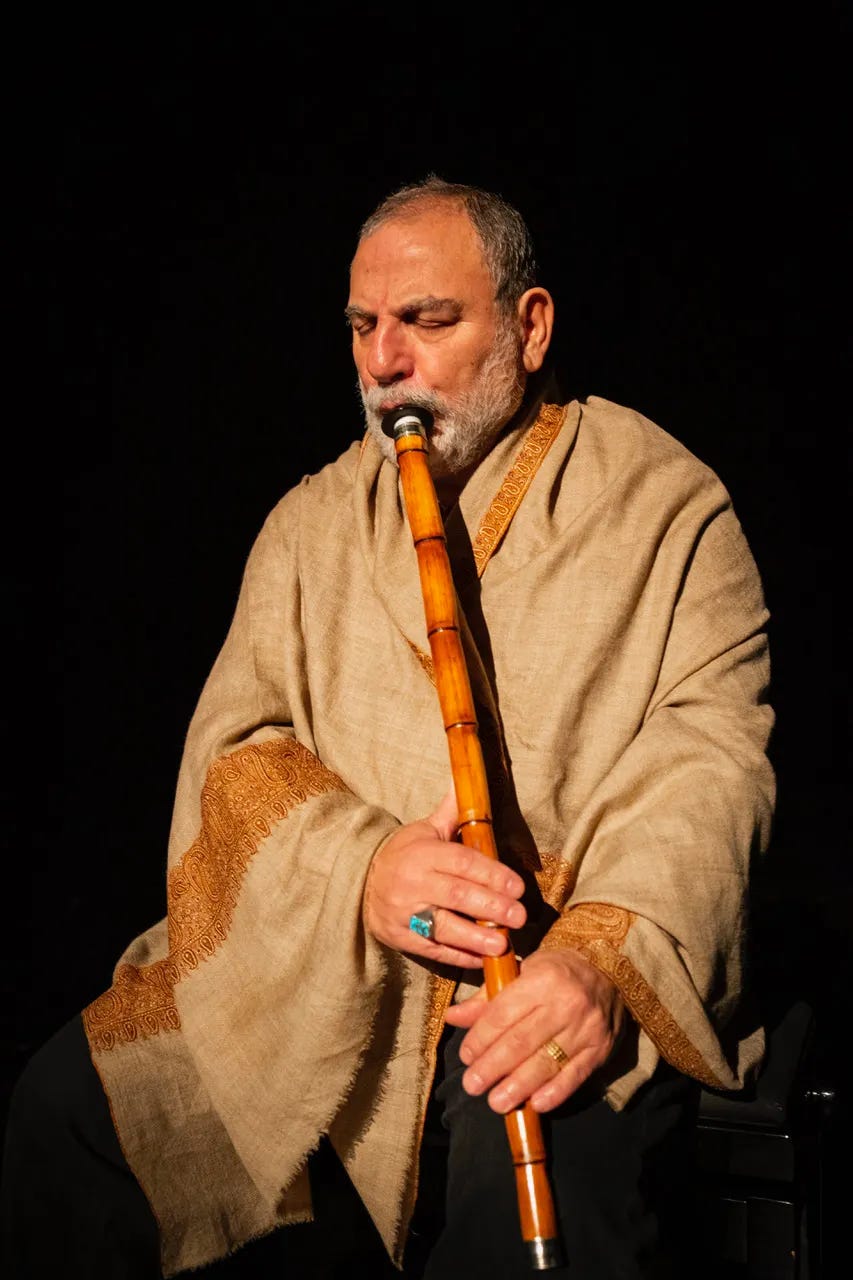
UPEE:奈伊笛(Ney)是您的音乐中最重要的配器,它本身即是一个十分有文化属性的乐器。而在它的声音里,你觉得奈伊笛对你而言最能体现出一种“不可替代性”的部分是什么?
Kudsi:和许多吹管乐器一样,奈伊笛的音色深沉悠远、意蕴绵长。这或许也是诸多灵性修行传统,都偏爱用长笛类乐器辅助冥想的原因。
自 13 世纪宗师鲁米所处的时代开始,奈伊笛便一直是苏菲托钵僧修行仪式中的核心乐器,同时也在奥斯曼古典音乐里占据举足轻重的地位。
但真正赋予音乐灵魂的从不是乐器本身,乐器终究只是服务于演奏者的载体。在苏菲修行仪式与托钵僧传统中,奈伊笛用以抒发灵性觉醒、向内求索的精神旅程。正因如此,演奏者的心境与精神修为,远比乐器本身更为重要。
Like many flutes, the Ney has a very deep and profound sound. Perhaps this is why many spiritual traditions have favored flutes for meditation.
Since the time of our master Jalaluddin Rumi (13th century), the Ney has been the principal instrument in the dervish community. It also holds an important place in Ottoman classical music.
However, it is not the instrument itself that creates the music; the instrument is simply a tool that serves the musician. In rituals and within the dervish tradition, the Ney is used to give voice to an initiatory inner journey. For this reason, the spiritual state of the musician is more important than the instrument itself.
UPEE:我们观察到土耳其的爵士乐社群十分活跃、历史悠久,音乐人也保持着与其他国家地区的音乐人进行合作交流的开放姿态,例如你曾经和 Peter Gabriel 合作、也在《Ottomania》中与Christof Lauer、Michel Godard、Mark Nauseef合作,其余土耳其音乐人例如 Konstrukt 曾和 灰野敬二 (Keiji Haino)、Ken Vandermark 合作,我们好奇作为这一社群的重要人物,你会怎么形容的土耳其爵士乐现在位于爵士乐视野里的位置,又有什么关于它未来的愿景呢?
Kudsi:如今土耳其涌现出大量横跨各类曲风的优秀音乐人,爵士领域亦是人才辈出。
这批音乐人大多有着传统音乐功底,一大突出优势便是即兴创作能力。即兴本身就是土耳其音乐传统不可或缺的一部分,尤其依托木卡姆调式体系的深厚积淀而成。
像小提琴、大提琴、单簧管这类乐器,更易促成不同音乐传统之间的即兴融合创作。
土耳其,尤其是伊斯坦布尔,自古便是东西方文化的交汇桥梁。而爵士舞台恰好成为绝佳的交流场域,让音乐人既能坚守自身的音乐特质与文化身份,又能与外来音乐思潮展开平等对话。
但有意思的是,近些年来,许多受过欧洲古典音乐训练的音乐人,开始用非常规方式演绎传统乐器——把乌德琴当作吉他演奏、将奈伊笛视作西式长笛、把卡农琴当作竖琴。
在我看来,真正的音乐上的丰盈,在于相融而不失本真,这才是作品拥有独创性与深度的根本。
Today, in Turkey, we have a large number of excellent musicians across various genres, including jazz.
One of the strengths of many of these musicians—many of whom come from traditional music backgrounds—is their ability to improvise. Indeed, improvisation is an integral part of our musical tradition, particularly through the mastery of our modal systems, the maqams
In particular, the use of instruments such as the violin, cello, or clarinet facilitates improvised fusions between different musical traditions.
Turkey, and Istanbul in particular, have long played the role of a bridge between East and West. The jazz platform therefore serves as an important meeting ground, allowing each musician to preserve their own identity and musical character while engaging in dialogue with other influences.
Paradoxically, however, in recent years, many musicians trained in European classical music have been seeking to create new musical forms by using traditional instruments in unconventional ways: the oud like a guitar, the ney like a Western flute, or the kanun like a harp.
To me, true richness lies in being together without losing our individuality—this is what makes the music original and full of depth.
UPEE:对于即将在明天音乐节进行表演有什么期待?
Kudsi:我非常喜欢 “明天音乐节” 这个名字,极具启发性。
我始终坚信,音乐是过往与未来的交融共生。活在当下的每一刻,既是过往的沉淀,也是明日的序章。我十分荣幸能参与这次盛会,也期待在深圳与各位音乐同好相聚相逢。
I find the title of the Festival very inspiring: “Tomorrow Festival.”
I am convinced that music is a synthesis between the past and the future, that the present moment should be lived with the awareness that every moment we experience is both the consequence of the past and the preparation for tomorrow. I am very happy to take part in this experience and to meet fellow music enthusiasts in Shenzhen.