专访 Matmos | 我们的创作就像声音的对话
2026-7-13

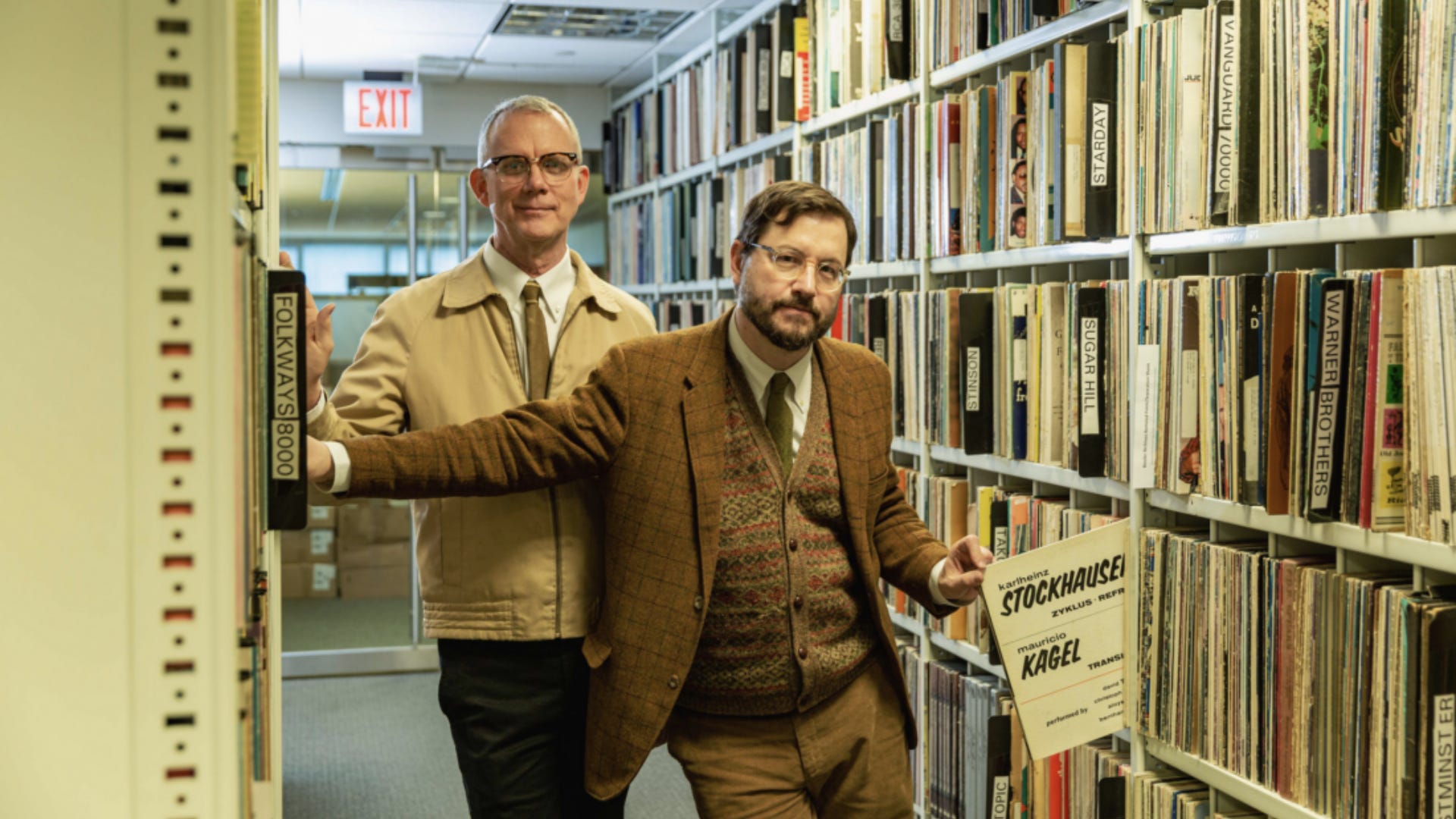
深耕实验电子前沿,将日常与经历以独特而自我的音乐语言重塑,带来极具性格与张力的听觉体验,Matmos 一直以来都可谓是自成一派的艺术家。而在今年 7 月的最后一天,他们将在上海 wigwam 开展国内唯一一场专场,UPEE 有幸邀请 Matmos 进行专访,分享关于创作的理念以及感受、以及对本次中国之行的期待。
UPEE:距离Matmos名义发布的首张作品已经过去了超过 30 年,在你们庞大的作品序列里也有许多风格与场景的涉猎,诸如 IDM、Folktronica 再到现在更 Musique concrète 的创作——在这些流派类型的变化之外,有没有什么声音或者气质是你们认为 Matmos 一直延续的,换句话说,你们有没有刻意将某种元素作为 Matmos 音乐里的标识?
M.C. Schmidt:我认为流派这种东西,主要是给开唱片店的人用来把专辑分门别类摆放的。除此之外,它们只会变得很麻烦。我们创作的一个标志性特征是“化小为大”,这算不上一个流派——如果你试图把这句话印在唱片店的塑料隔板上,那倒会是个有趣的流派名。
I think genres are primarily useful if you run a record store and you are trying to organize the records into different sections. After that, they start to become troublesome. It’s certainly not a genre, but one of the hallmarks of our activity is to make small things big which would be a funny genre if you tried to fit that phrase on one of those plastic dividers in a record store.
Drew Daniel:我能感觉到在我们的合作中,有一种对探索声音的快乐感始终存在。通常当你刚开始做电子乐时(其他类型也一样),都会经历一个学徒期,那时候你总是试图模仿自己崇拜的某种风格。我能在我们最早那张同名的独立专辑里听到一些尝试。我们总是在两极之间摇摆:一边是日常生活中的琐碎声音,另一边则是某种通过电子转化或处理、使这些日常变得陌生的手段。我认为这就是 Matmos 核心的辩证法,生的与熟的。
I sense a consistent feeling of joy in exploring sound that has always been there when we are working together. Often when you start out making electronic music (as with many other kinds of music) there is an apprenticeship phase early on when you are trying to see if you can replicate certain styles that you admire. I hear some attempts at that on our very first self-titled, self-released album. We are always swinging between two poles: the everyday sounds of the everyday world, and then some kind of electronic transformation or processing that estranges that world. That’s the dialectic at the heart of Matmos, I think: the raw and the cooked.
UPEE:除此之外,两位成员在 Matmos 之外还有其他的项目,我们好奇 Matmos 的音乐跟其他的项目相比,对你们而言,它在声音上有没有什么最独特的个性?
M.C. Schmidt: 我们共同创作出的东西,要大于各部分的总和。当我们聚在一起时,会产生某种绝对比我们个人更大的东西——这是一种协作的效应,虽然我觉得这个词有点俗套。
What we do together is greater than the sum of its parts. Something emerges that is definitely larger than the two of us when we come together- there is a synergy though I suppose that word is a cliché.
Drew Daniel:M.C. Schmidt 能做到我做不到的事,而我也会做一些他通常不做的尝试。Matmos 的产生就像是一场声音的对话——我们各抒己见,并互相剪辑对方的贡献,最终抵达一个既有节奏又有噪音的地方:那里有 M.C. Schmidt 用双手演奏出的图案感,也有我处理声音节奏切片的独特路径。当我们邀请其他朋友参与专辑录制时,这种对话的范围会更加宽广,但这就是其核心所在。
M.C. Schmidt can do things that I cannot do; I do things that he doesn’t tend to do. Matmos happens in the form of a sonic conversation- we each contribute, and we each edit each other’s contributions, so it arrives at a place that has rhythms and noises, the feeling of patterns that M.C. Schmidt plays with his hands, and my approach to the rhythmic cutting up of sound. It can get broader than that when we bring in other friends to play on our records, but that is the heart of it.
UPEE:作为长期活跃的创作者,你们见证了很多类型以及音乐运动的兴起和发展,作为这个流派的艺术家,你们会怎么看待 IDM 作为一个类型从千禧年到现在的变化;以及,你们对现在所处的电子乐圈层有什么特别的感受吗?
Drew Daniel:看到年轻的音乐人和 DJ 们回归到 IDM 的音色库和创作形式中,并注入他们自己全新的、带有转化意味的灵感,这让我感到非常欣喜。如果要举例当下的新鲜制作人,我可以列举一百万个人,但今天我想提到 K Wata、Loraine James、Ramon Pang、Xenia Reaper、Paperclip Minimiser、Crespi Drum Syndicate、Upsammy、Skee Mask、Djrum 和 6amsunset。他们在当下所做的事情让我感到兴奋,他们不是对“IDM”这个理念的复刻,却能带来我大脑中与经典的“IDM”(比如 Phoenecia、Push Button Objects 和 Autechre)相同的快感。我认为事物的演变、位移和变异是非常美妙的。那个时代的很多艺术家至今仍以极具说服力的方式工作着,我也希望我们所做的,能被视为在过去作品基础上的有力的发展。
I am tickled to see younger musicians and DJs returning to the palette and forms of “IDM” but putting their own, new transformative spin on things. As examples of fresh producers that I have in mind I could list a million people but for today I will just say that K Wata, Loraine James, Ramon Pang, Xenia Reaper, Paperclip Minimiser, Crespi Drum Syndicate, Upsammy, Skee Mask, Djrum and 6amsunset are all doing things that excite me in the present that are not derivative of “IDM” but that hit the same pleasure centers in my brain that classic “IDM” such as Phoenecia and Push Button Objects and Autechre also hit. I think it’s beautiful that things evolve and shift and mutate. There are people from that era that are still working in persuasive ways and I hope that what we do feels like a valid step forwards from our past work.
M.C. Schmidt:我想相比那些更忠实于“IDM 传统”的捍卫者,我们更愿意全身心地投入到对其余流派的拼贴之中。
I think we are more willing to fully engage in the pastiche of other genres than other people who are more true standard-bearers of the “IDM tradition” are.
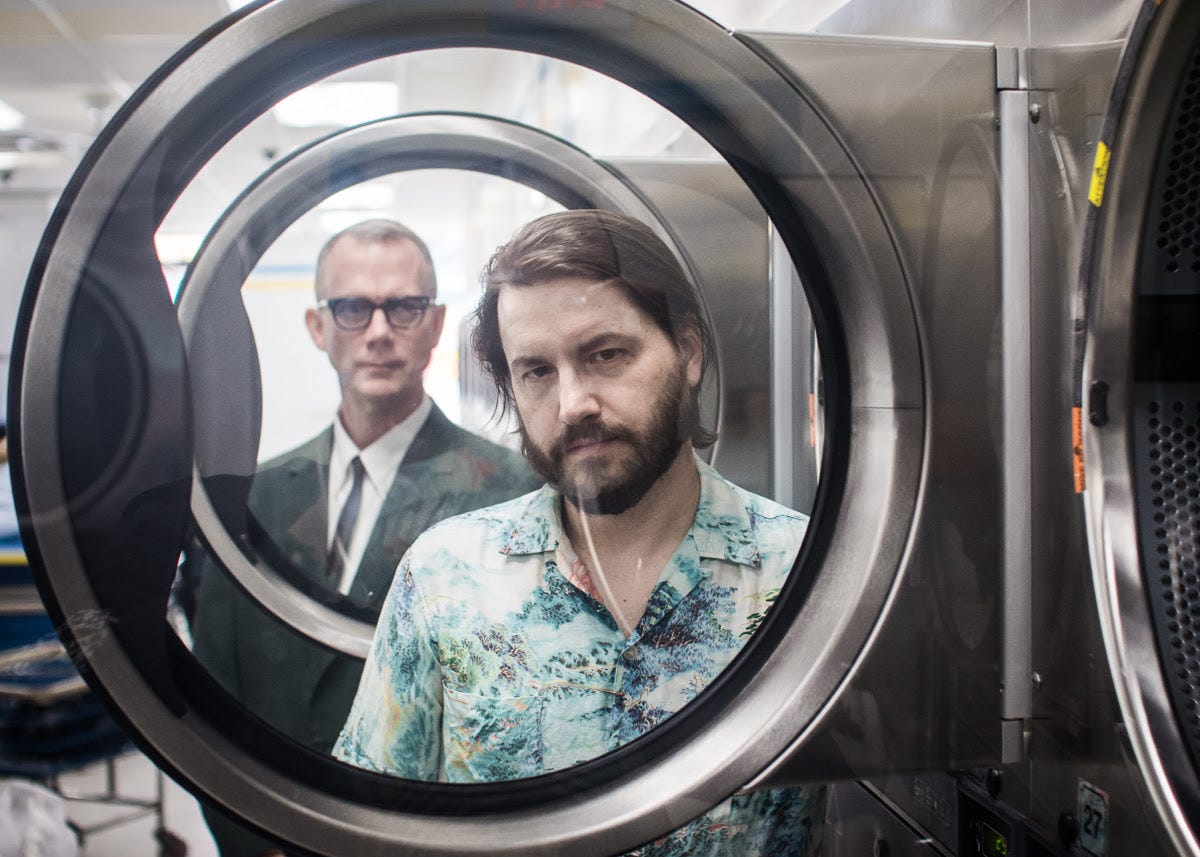
UPEE:在你们去年的专辑《Metallic Life Review》里,金属的声音、音色以及它给人带来的质感是一个非常重要的意象,在创作制作这张作品的过程中,你们如何想到这个概念的?
Drew Daniel:我接触到了“人生回顾”(Life review)这个概念——基本上就是濒死体验中人的一生在眼前闪回的瞬间——于是我设想了一个版本,在这个版本里,只有你生命中出现的那些金属物体才会这样闪回。那个从“假如”开始的比较有概念感的时刻,就是这张专辑的起点。随后,这个概念就像一个过滤器,作用于我们那些装满了乐队生涯中收集来的声音的硬盘上,它将其中的金属元素进行隔离和筛选,然后我们开始为这些老旧的声源创作新的声音。这感觉像是一个自然的过程,就像记忆本身:你会珍视某些事物,但或许也会通过将它们从原语境中提取出来的方式,去重构甚至扭曲它们。我们的希望是,这些歌曲能成为一个连续体中明亮、陌生而美丽的片段。
I encountered the concept of the “life review”- basically a “near death experience” in which your life flashes before your eyes- and imagined a version in which only the metal objects from your life flashed in this way- that conceptual moment of “what if?” was the start of the record. It then acted like a filter on our hard drives filled with sounds that we have gathered over the course of our lives as a band, and it isolated and selected, and then we got going making new sounds to go with those older sound sources. It felt like a natural process, like memory itself: you cherish certain things, but perhaps you also distort them with the way that you select them from their context. Our hope is that these songs become bright, strange, beautiful excerpts from a continuum.
UPEE:在此之前两位成员有没有来过中国?对于这次中国之行有什么期待,例如有没有什么特别想吃到的食物?
M.C. Schmidt: 我对中餐的认知仅限于美国那些餐馆,以及那些餐馆老板为了谋生而决定呈现出的菜品。我几乎完全不了解真正的中国菜。如果我理解得没错的话,我非常喜欢西安风味的食物,如果在中国,我希望能吃上很多很多地道的西安菜。
My experience of Chinese food is limited by the restaurants in the United States and what those people decided to do with their restaurants so that they could make a living. I am mostly completely ignorant about the real Chinese cuisine. If I understand it correctly, I really love Xi’An style food and want to eat lots and lots more of it when I am in China.
Drew Daniel: 我十二年前曾和父亲一起去过中国,因为他对丝绸之路的历史非常感兴趣,所以我们看了兵马俑和敦煌莫高窟,还去了吐鲁番、喀什和乌鲁木齐,之后继续前往吉尔吉斯斯坦、乌兹别克斯坦和土耳其(那次旅行的目的就是沿着丝绸之路从北京到伊斯坦布尔)。至于这次旅行,我们在上海演出结束后会以游客的身份在中国游玩,这次我们想去成都。我们听说那里的食物非常封神,我们已经迫不及待要大快朵颐了。
I visited China twelve years ago with my father because he is very interested in the history of the Silk Road, so we saw the Terra Cotta warriors and the caves of Dun Huang and also visited Turfan and Kashgar and Urumchi before traveling on to Kirghiz Republic and then Uzbekistan and Turkey (the whole point of the trip was to trace the Silk Road from Beijing to Istanbul). For this trip, we are going to be tourists in China after our Shanghai concert, and this time we want to go to Chengdu. We have heard that the food there is incredible and we cannot wait to feast.