

专访 Sarah Davachi | 每个人在音乐中都有独属于自己的共鸣
2026-5-13

在过去十二年间,明天音乐节已发展成为深圳重要的实验和前卫音乐平台之一,始终致力于支持那些游离于主流之外的艺术家。而在今年,UPEE 与明天音乐节进行合作,我们将在接下来的更新中与本届明天音乐节阵容中的五组音乐人进行专访。
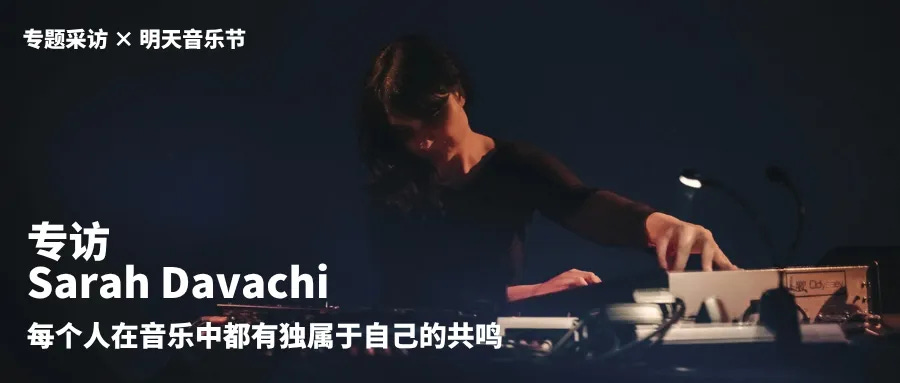
Sarah Davachi 作为深耕声音艺术的创作者,以独特的创作视角游走于声音的探索与感知之间,搭建起极具空间感与在场感的听觉世界。恰逢第十届明天音乐节,这位音乐人也将迎来首次中国舞台演出,UPEE 有幸邀请 Sarah Davachi 进行一期专访,解读她的声音创作哲学与现场理念。
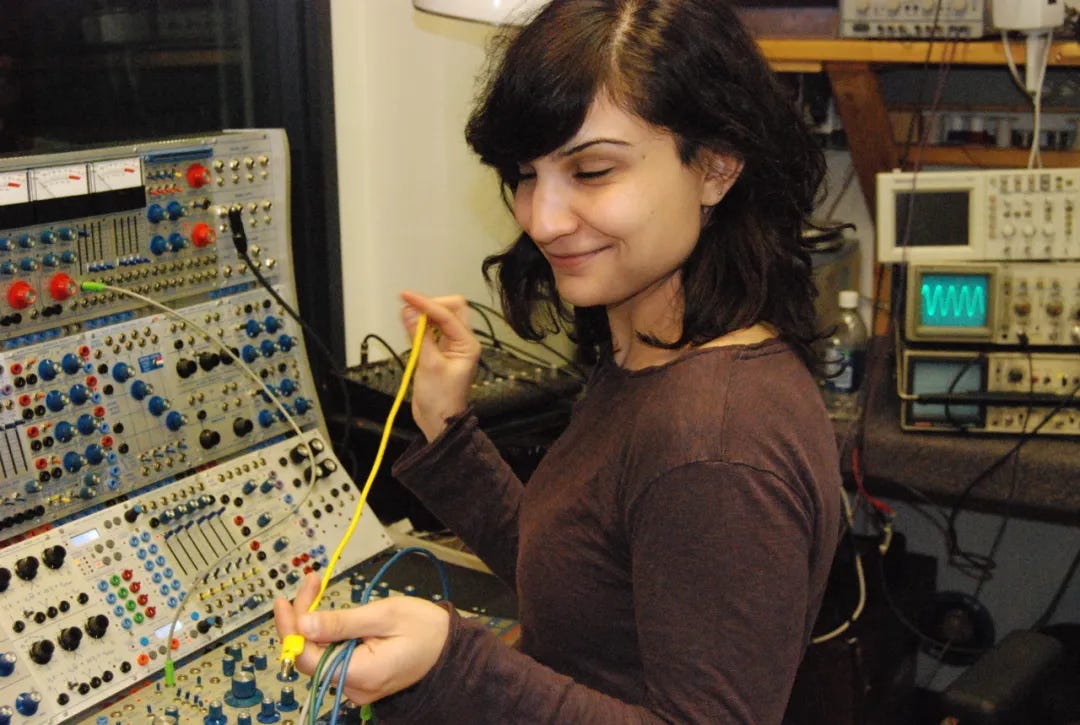
UPEE:你的音乐中包含了许多对声音、环境的解读和体验,而与此同时你也曾在许多西方乐理以及合成器音色之间进行探索。你此前有在采访中提到你就“乐理对于自己创作的影响”的看法,似乎很多声音艺术家都会面临这样的一个比较踌躇的阶段,你觉得乐理对于你接触、感受声音有带来哪些新的视角或迂回吗?
Sarah:我认为,一个人愿意去学习的任何事物,都只是装进自己创作工具箱里的更多工具,时机合适时,可以取用,也可以选择不用。对我而言,乐理知识只是多的一项可以随时取用的创作储备。在我的音乐里,乐理(尤其是音律理论)是探索声音结构基底的途径,也能帮我理解声音律动的各种可能性走向。同时,它也极大帮助我理解声音的几何构成、音色之间如何关联呼应、或是彼此疏离。我向来习惯用建筑、空间的意象去理解声音,乐理于我更像是一种基础建材,新的创作灵感可以从中生长而出,也可以以此为基底打破重构。
I think that any and all things that someone is open to learning are just more tools that they can put into their “kit” and pull from, or not, as needed, whenever the time is right. Having a deep understanding of music theory for me is just another thing that I can pull from if I want. In my music, music theory (and especially tuning theory) is a place for exploring the structural basis of sound, and for understanding possible directions that things that move in. It also is extremely helpful in understanding the geometry of the sound, how things relate and support one another, or not. I tend to think of sound in architectural or spatial metaphors anyway, so music theory for me has mostly served as a kind of building material that other things grow from or destroy.
UPEE:作为多乐器演奏者,你的作品中不乏许多令人印象深刻的原声和电子乐器的配合,我们好奇你对于配器或具体的乐器是如何进行选择的?是如何想到在一个作品中选择“这一个声音”,您创作一个作品的过程通常是什么样的?
Sarah:我并不认为原声乐器和电子乐器有着本质区别。或者说,两类乐器之间的差异,并不比同类别里不同乐器的差异更大。换句话讲,在我看来,合成器与钢琴的差别,并不比长笛与钢琴的差别更大。我习惯把每一件乐器都视作独立的个体,愿意花时间细致探索它的音色特质,之后再开始编曲创作。比如探索两件同种乐器合奏的质感,或是长笛与单簧管这类不同乐器的音色融合。
很多时候,一首新作品的缘起,是想要深入挖掘某一件乐器的特有表达方式,或是想直接尝试某种全新的音色组合。也有些时候,作品的结构、情绪和整体轮廓已经在脑海里成型,我再为这份构思挑选最合适的乐器进行配器编排。我的创作基本就是这两种方式并行。同样,我的创作脉络有时由小及大,从一个灵感、一种音色、一段声响出发,慢慢拓展格局与层次;也有时由大到小,先确立整体概念与情绪内核,再在创作中不断细化打磨细节。
I don’t see acoustic and electronic instruments as being intrinsically different from one another. Or rather, I don’t see one category being any more different from the other than specific representatives within the same category – in other words, to me, a synthesizer is no more different from a piano than a flute is to a piano. I suppose I approach each instrument as its own thing and I like to take the time to explore it in detail, and then I start building, so perhaps exploring two of the same instrument sounding together, or a flute and a clarinet sounding together, or something like that. So often a new work will start from a desire to go more intense with a specific instrument idiom, or to have the opportunity to explore a timbral combination more directly. But other times the piece is already somewhat formed in terms of structure or shape or feeling, and then I have to kind of orchestrate the right instruments that I think will work best for what I have in mind. I would say that I work equally in both ways. And similarly, sometimes the workflow starts ‘small’, with an idea or a sound or a timbre, and then builds in scope and stature, and other times the workflow starts ‘broad’, with a general concept or meaning, and then becomes more specific and detailed as I work on it.
UPEE:我曾看到中国乐迷使用“在场感”来形容收听你音乐时的感受,而你是这个作品的“策展人”或叙述者,在创作作品之时,我们好奇你会把自己放置于这个作品的什么位置?你会不会期待听众以什么状态来感受这个作品?
Sarah:这是一个很棒的问题。我也认同这种看法——听众在完成声音体验、形成完整审美闭环的过程中,扮演着至关重要的角色。在我眼里,作曲家和演奏者同样也是听众,也会以自身的方式去引导音乐的走向。
延续我之前提到的空间意象,我常把自己定位成建筑设计者——由我搭建并塑造整个声场空间与情绪氛围,但我不会去规定、干预听众身处其中的感受与体验。这部分,交由沉浸其中的听众自己完成。我决定空间里放置哪些声音、如何排布,但当音乐响起、声场铺开之后,其中生发的一切感受,就不在我的掌控之中了,而我也本就希望如此。
当然,我自己聆听作品时,会有属于个人的期待与感受,但我绝不会把这份主观感受强加给听众,我也认为这根本无法做到。每个人都会生出独属于自己的共鸣,我所能做的,只是通过声场的设计,温柔地引导这份感受的走向。
This is a great question. I also see it that way, that the listener plays a very important part in creating and essentially finishing the cycle of the sonic experience. I see the composer and the performer as listeners also, and in the same way they also do specific things to shape the direction of the music. In keeping with the spatial metaphors that I mentioned above, I often think of myself as fitting into an ‘architect’ archetype: I’m the person who builds and designs the space and the feeling of it, but I don’t necessarily dictate or oversee the day-to-day usage of the space. That’s up to the person dwelling inside of it. I choose what objects go into the space and where they’re placed, but ultimately what happens in that space when the sounding experience begins is out of my hands. And that’s how I want it to be. I obviously have my own expectations of what I personally want to experience when listening to my music, but I absolutely wouldn’t want to impose that onto the listener, and I don’t even think that that’s possible. Everyone is going to have their own psychological response, it’s just one that is gently guided by the design of the sonic space.
UPEE:你在 2020 年代发布不少现场专辑,包含《Figures in Open Air》《In Concert & in Residence》,以及合作的《At Kunst-Station Sankt Peter Köln》与《Music for a Bellowing Room》。我们好奇在 Live Session 或者现场表演时,你对声音的控制与作品录制时会有什么不同?你觉得你的现场能量是什么样的?
Sarah:对我来说,现场演出有着独一无二的特质。声音在实体空间中自然流淌,不受录音作品时长与制式的束缚。我认为,感受并区分我的现场作品与录音室作品之间的差异,是一件很有意义的事。我的现场演绎更凭直觉、也更自由,唯一的参照就是自己的耳朵,聆听当下实时的声场变化。我无法像在录音室里那样,反复回听、精细调整音色位置与声部关系,所有判断都必须临场即时做出。这也让现场多了一份独特的亲近感,真切诠释了何为 “创作与演绎合一” 的音乐人。现场在时长上也更少受限,我可以顺着自然的情绪节奏铺展声音,不必为了适配录音制式而刻意裁剪调整。
当然现场也有一些不尽人意的部分,演出前我能调试场地声学的时间十分有限,而且我通常站在主扩声设备后方演奏,即便有监听音箱,也并不是绝佳的听音位置。因此我很难完全掌控整体声场效果,大多时候只能顺其自然,依赖场地声学与调音师的把控。只要条件允许,我更愿意坐在场地中央、远离舞台,这样能更直接地感知声音在空间里真实的传播状态。
也正因如此,对于这类音乐,我并不推崇传统的 “舞台表演” 模式。我的现场没有太多视觉看点,只是细微的参数调节,一切节奏都极为舒缓。当听众不必被多余的舞台视觉分心时,才能更深地沉入声音本身。
Yes, for me, live performance has a unique quality of sound moving through physical space, free from the durational constraints of the recorded medium, and I think that it’s important to experience and appreciate the difference between my “live” and “studio” works. My live performances are a bit more intuitive and freer, in the sense that my only tether is my ear and what it’s hearing in real time, in the moment. I don’t have the luxury like I do in the studio of going back and fine-tuning where things sit and how they relate; in live performances, I have to make those decisions in real time. And for me that adds an extra element of intimacy, creating a true sense of what it means to be an active “composer-performer”. There are of course fewer constraints on time in a live performance, which offers me more control in the sense that I can let things really move in a way that feels natural, without the need to adjust to fit into the recorded format. Of course, there are also acoustic drawbacks since I often have a very limited amount of time in the performance space before the concert, and given that I’m usually situated behind the PA, which is a terrible place to listen from even with monitors. So, it’s harder for me to really be in control of the overall sound, and usually I’m just at the mercy of the space and the sound engineer. Whenever I can, I prefer to sit in the middle of the room, off stage, so that I can engage even more directly with the sound as it’s actually moving through the room. In the spirit of that, I also kind of reject the idea of performer-on-stage with respect to this kind of music. There’s nothing particularly interesting to look at when I perform ¬– I’m making small adjustments and everything is very slow moving – and I find that when the audience is not distracted by an unnecessary visual, then they can go deeper into the sound itself.
UPEE:对于即将在明天音乐节进行表演有什么期待?
Sarah:完全没有预设!这是我第一次来到中国演出,我不想给自己、也不想给听众设定任何期待。我只想把一切交给现场,相信这一定会是一场惊喜又美好的体验。
I have none! This is my first time performing in China and I don’t want to set any expectations for myself or the audience, I just want it to be a surprise and I’m sure that it will be a pleasant one!