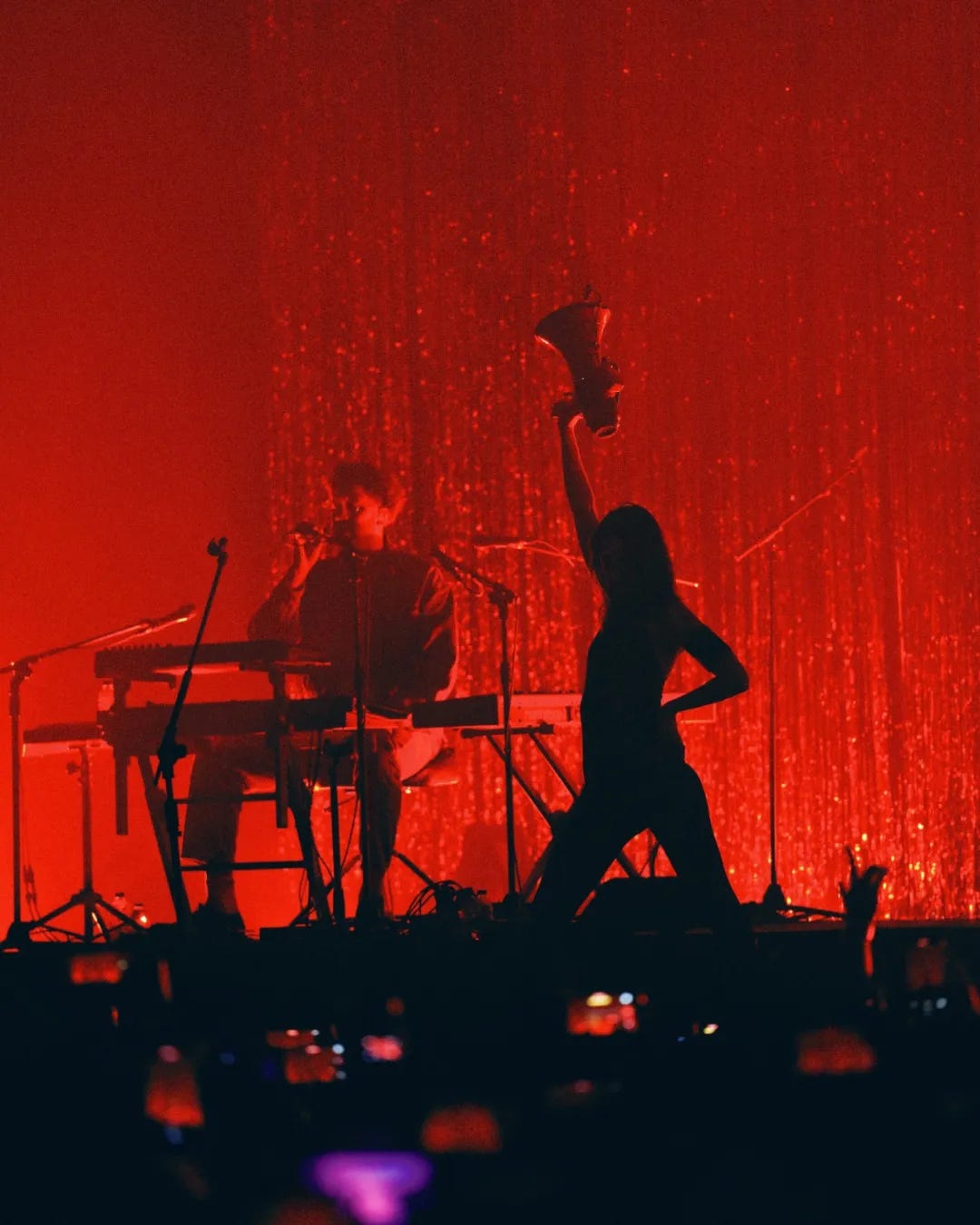
专访 Wolf Alice|拒绝成熟,在复古中持续演变
2026-01-19

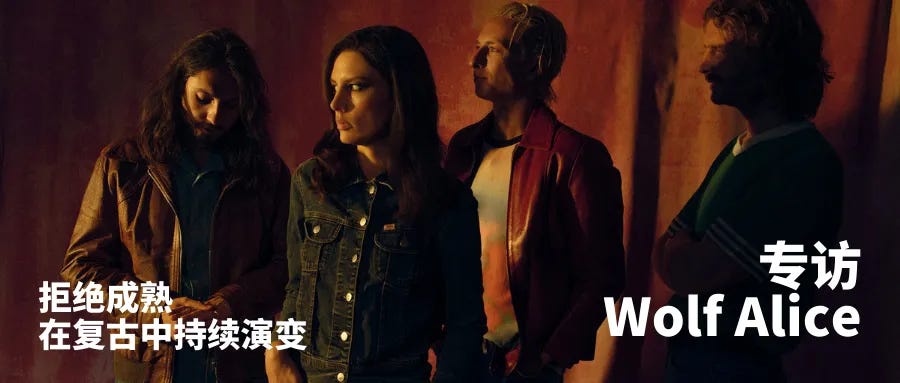
作为当前英国摇滚乐坛成熟且极具影响力的中坚力量,Wolf Alice 以流动、融合的音乐风格呈现出了一幅极具特色的乐队图景。他们的作品往往被认为受到1990年代垃圾摇滚的影响,而去年发行的《The Clearing》中,他们又回溯1970年代摇滚乐的声音传统,却都以鲜明的流行倾向证明了他们为什么始终是独立摇滚场景里不可或缺的一支乐队。UPEE 有幸在此次中国巡演收官场次来到上海瓦肆 VAS est 的后台,与 Wolf Alice 的成员们 (主唱 Ellie Rowsell、吉他手 Joff Oddie、贝斯手 Theo Ellis、鼓手 Joel Amey) 进行了一场对话,希望通过这次专访,听他们谈谈对自己音乐、乐队以及巡演的看法。
UPEE: 在新专辑《The Clearing》里,你们的风格向1970年代的摇滚音乐靠拢。在复古潮流的2020年代,你们认为“复古”在当下意味着什么?这些意义可以是对于你们个人而言的,也可以投射到更广泛的全球音乐场景上。
Theo: 对我来说,不论是想到我们这张新专辑,还是想到当下其他音乐人,“复古”更多强调一种音乐上的参考点,而不是那种拼贴模仿式的东西。我觉得你可以从某个时代里汲取许多不同的灵感。比如说,灵感可以是那个时代音乐人创作时所遵循的原则,而这正是我们真正感到着迷的地方之一。在1970年代,乐队们制霸排行榜,做出了许多极其出色的流行歌曲,但使用的乐器与我们进行音乐创作的乐器是一样的。我认为对我而言,“复古”这个词本身带点贬义。它听起来有点像是仿作的代名词,像某人在刻意模仿某种东西,但其实“复古”只是把某个时代当作一个起点,是一个能把你的想法推向全新方向的出发位置。
UPEE: On The Clearing, your sound leans more toward the rock music of the 1970s in style. In the 2020s that is typically characterized by the “Retro Decade” phenomenon, what do you think “retro” means now at this midpoint of 2020s? It could be something very personal and specific to Wolf Alice; or, how would you guys frame it in the broader global music scene?
Theo: I think retro to me – when I think about this record and maybe when I think about other artists around at the moment – is more of a point of reference rather than a pastiche thing. I think you can be referential to an era for lots of different points of inspiration. It can be the principles of which they were working, which is one of the things that we were really intrigued by. I think in the 1970s, bands dominated the charts and were making incredible pop songs, but on the instruments that we use for our artistry. So I think retro to me has a kind of almost a bit of a dirty word. It’s a bit pastiche, like you’re trying to emulate something, [while] it’s [actually] like jumping off a point or a place that helps inspire your idea in a new direction.
UPEE: 那你们如何看待当下这个全球音乐场景下的复古趋势?是好是坏呢?
Joel: 你刚才提到“时间”这件事 [指问题中的“当下”],其实挺有意思的。因为当我想到“复古”时,我脑子里会冒出那种比如“喇叭裤”之类的东西 [注:喇叭裤 (英语: Bell-bottoms, flares) 是一种从膝盖处向下变宽,裤腿呈钟形或喇叭形的裤子,在1970年代盛行]。当然,这大概也跟我的年龄有关。而对当前更年轻的音乐人来说,从现在往后看,像新金属 (nu-metal) [注:一种起源于1990年代的金属风格] 这样的风格,可能就会被他们视为“复古”了。你懂我意思吧?“复古”的这个判定界线是会一直变化的。我觉得“复古”并不与某一种会随着时间推移而变化的声音或风格类似。所以我倒是觉得,现在去看音乐里哪些东西又重新成为被参考的对象,这件事本身就很有意思。比如说,某一种特定的独立 (indie) 风格又开始重新变得很酷了,而我们已经很多年没听到那样的东西了。再比如,2000年代早期的那种影像和视觉风格,那种泡泡糖式的流行审美,还有那些在当年被嘲讽贬低的流行音乐……现在反而被认为超级酷。这真的挺有意思的。
Theo: 一直做到完全原创其实是很难的。你的个性、你的身份,本身就是由你亲身经历过的那些过去,以及你后来学习了解到的那些过去共同构成的。所以我认为,“复古”本身就是艺术里一个长期存在的核心命题——可以具化为“过去如何启发你下一步要做什么”这个观念。
UPEE: So how do you guys see this global trend toward retro and nostalgia in music today? Is it a positive or negative thing?
Joel: Yeah, it’s interesting when you said about the time thing. Because when I think of retro, I do think of like, okay, flares. Yeah, because of the age I am. Like, now, you know, [for] younger musicians, [styles] like nu-metal will probably seem retro to them whenever from this point. You know what I mean? The goalposts are going to be forever changing. I feel like retro isn’t really like a sound or a style that’s going to change as time goes on. So I think it’s quite interesting seeing what’s becoming referential again in music. Be like, a certain style of indie is becoming kind of cool again. We haven’t heard of [it] for ages and things like that. And yeah, like early 2000s kind of imagery and stuff like that, like bubble gum kind of pop things and like… pop music that was derided at the time is like super cool now. It’s interesting.
Theo: It’s quite hard to be completely original all the time. Your personality and who you are is made up of all these experiences from the past that you’ve lived and then also the past you’ve learned about. So that’s a mainstay of art as a wider thing, I think – the idea of the past informing what you do next.
UPEE: 你们唱片目录中的音乐风格横跨独立摇滚、钉鞋、民谣、还有流行等等。即便有这么多种来自不同年代、不同风格的声音综合在一起,你们的唱片目录依旧听起来连贯完整。你们认为使你们做到这种“连贯性”或“辨识度”的内核是什么?
Joff: 我觉得关键就在于我们这四个人本身吧。就是 Joel 打鼓的方式、Ellie 写歌的方式,你懂我意思吧?归根结底,这一内核就是我们四个人加在一起的结果。哪怕我们每个人有时可能会更倾向于不同的风格,或者决定往不同的方向走,但你知道的,终究还是我们四个人,而我们每个人都有自己的一套演奏方式、合作方式,也都有一些各自偏好的旋律类型、和弦结构,还有我们共同熟悉的那些参考体系。正是各种个人元素加在一块组成了 Wolf Alice,而这也是让我们保持始终连贯一致的最重要的内核。
UPEE: Your discography spans a wide range of styles, like indie rock, shoegaze, folk, pop, and more. But even with all these sounds from different eras and genres mixed together, your catalog still feels incredibly cohesive as a whole. In your opinion, what is the “connective tissue” that gives your music the strong sense of continuity and identity?
Joff: I think it’s just the 4 members, you know? I think it’s just the way Joel plays drums, the way Ellie writes songs, you know? I mean, it’s the sum of the four of us, and we may be leaning on different styles or deciding to go in different directions, but, you know, it’s all the 4 of us that have our own kind of ways of playing, ways of collaborating, [and] you know, certain preferences for certain types of melodies or chord structures or, you know, the shared references that we’ve kind of got. So as a kind of sum of all the kind of individual elements that make up Wolf Alice, you know, that’s what stays continuous.
UPEE: 如果你们想要让听众记住一个你们作品中最关键的亮点,你们希望是什么?
Ellie:我其实不太觉得真的有那么一个绝对、单一的东西吧。可能对某一首具体的歌来说,你会希望他们能从那首歌里带走点什么。但如果是放在整个音乐作品的层面上,我不太确定……我不知道你觉不觉得,但如果听众从每一首歌里都只带走同样的一个东西,我反而不会觉得那是一件多么了不起的成就。你会更希望音乐作品是由很多不同的东西混合在一起的。
UPEE: If there’s one takeaway or message that you’d like the listeners to walk away with from your music, what would it be?
Ellie: I didn’t think there is one thing, really. Like, maybe individual songs, you know, [there’s] something you want them to take away from the individual song. But the music as a whole, like… I don’t know if you feel [that] I wouldn’t feel like I’ve achieved a great thing if they got one thing from every single song, you know. You kind of want it to be a mixture of stuff.
UPEE: 作为一支已经活跃了十多年的乐队,你们的创作、分工和沟通方式是否随着时间发生了变化?
Theo (开玩笑地说): 是的,呃……没有?
Ellie: 对,有的。我觉得这种变化其实是很自然的,因为你在变老,你自己也许就在变,而你周围的一切也都会多少发生一些变化。
UPEE: 年龄是一个因素,是吧?
所有人: 对,经历,还有你的经验。
Theo: 对,经验。时间流逝,而我们是在彼此身边一起长大的——不只是个人交情上,还包括创作层面上我们做过的那些事。所以这一切对我们来说,某种程度上都是一种共同的经历,这一点其实挺有意思的。
UPEE: As a band that has been active for over a decade, have your creative process, your roles in the band, and the way you communicate changed over time?
Theo (jokingly): Yes, umm… No?
Ellie: Yeah, yes. I think you just naturally will change a bit because you’re getting older and probably changing yourself, and everything around you changes a little bit.
UPEE: Like, age is a factor.
All: Yeah, experience, experience.
Theo: Yeah, experience. Yeah, time passing and we grew up next to each other both personally and also, like, creatively what we did. So all of that we’ve kind of had is a bit of a shared experience, which is quite interesting.
UPEE: 那在这个基础上更深层次地探讨,有没有某个阶段让你们意识到 Wolf Alice 是一个更为成熟的乐队了?或者说,你们会如何定义一个乐队的“成熟”?不论是从音乐风格,你们的创作过程,还是别的方面上来说。
Theo: 这个问题蛮有意思的。(朝向 Ellie)我记得当我第一次听到你发来的“The Last Man on Earth”那版 demo 时,我当下的反应是:这就像把我带到了一个我之前并不知道,也许也没预料到我们会走向——甚至会不会走向——的地方。
Joff: 我甚至不太喜欢“成熟”这个概念,因为它更像是在暗示一个终点,而不是一个持续演变的过程,你懂我意思吧?就好像你成熟了,然后就死了。我更愿意把一支乐队——至少是我们的乐队——理解为一种始终在不断演变,而且会持续演变下去的存在。
UPEE: 所以,总是存在着一种可能性。
Joff: 我觉得是的。但所谓“成熟”之后会发生什么呢?接下来呢?
UPEE: 不妨让我们假设“成熟”是一个巅峰阶段。你们处在一个灵感非常充沛的状态。
Joff: 对,但我不太愿意把我们现在看作是已经到达巅峰了。
Ellie: 是的。我觉得在某种程度上,“成熟”反而是意识到,其实根本不存在所谓“成熟”这个东西。事实上,我曾经最初的想法,和我最新的想法,是同等好的。所谓“成熟”的一个积极面,在于保持开放。你学会去变得开放;你意识到做事情并不存在绝对正确的方式;你更多地去倾听彼此……也许达到这样一个状态,是相当成熟的。
UPEE: And going deeper from that, was there a particular stage where you guys realized that Wolf Alice had evolved into a more mature band? Or, how would you guys define the “maturity” of a band, whether in terms of musical style, creative process, or others?
Theo: Interesting. (To Ellie) I think when I heard [The] Last Man on Earth, the demo that you sent, I was like – this is an interesting place that I didn’t know that maybe I didn’t anticipate we will go or ever go to.
Joff: [I didn’t even] like the concept of maturing because it’s almost referring to an end point rather than a constant evolution, do you know what I mean? And then you mature, and then you die. I feel like a band, or I’d like to think that our band is something that has constantly evolved and kind of will constantly evolve, you know?
UPEE: So there’s always a potential.
Joff: I think so. But what happens after maturation? What happens then?
UPEE: Like, [assuming] maturity is the peak. And you are very inspired.
Joff: Yeah, I don’t like to think that we’ve peaked yet.
Ellie: Yeah. You know, in some ways, maturity is realizing that there’s always no such thing. Like, my first ideas are just as good as my last ideas. A good positive [of maturing] is being open. You learn to be open, or you learn that there’s no right ways to do something, or you listen more to each other… And maybe that is a nice place to get to, and that is quite mature.
UPEE: 你们当初为什么起名为 Wolf Alice?我们知道,这个决定最初是 Joff 和 Ellie 一起做出的。[注:Wolf Alice 最初是由 Ellie 和 Joff 组成的双人乐队]
Ellie (有些不确定地说): 我也说不上来,真的。嗯,我觉得大概是……
Joff (开玩笑地说): MySpace 页面上总得填个名字吧。
Ellie: 对,我们想要一个名字,然后……它是对那个故事的一个变体……叫什么来着?《小红帽》。我觉得或许名字里既有“狼”,也有“爱丽丝”,可以带点玩笑和对比的意味,希望给人一种感觉——你光从这个名字看,其实不太能预料到它会是什么样的声音。然后……还有一种幻想的混合,与此同时,也许……我也说不好。谁又知道呢?
UPEE: Why did you name yourselves Wolf Alice? We know [that] initially it’s a decision between Joff and Ellie.
Ellie (unsurely): I don’t know, really. Yeah, like I think probably...
Joff (jokingly): Needed something for the MySpace page.
Ellie: Yeah, wanting a name and… It’s like a kind of spin on… What was it called? Little Red Riding Hood. Yeah, I think maybe just having a wolf in it, and Alice in it too, kind of jokes [and] contrasting things, being made hopefully that you didn’t quite know what it was gonna sound like from that, and... Like a mixture of fantasy and at the time, probably… I don’t know. Who knows?
UPEE: 这些年里你们经历了那么多不同的阶段,也创作了不少作品,如果你们有机会能重新给乐队起个名字,你们会选择改吗?
Ellie: 不会(笑)。那就会变成完全不一样的东西了。我觉得改变乐队编制不需要改名字。名字说到底也只是个名字,不是吗?
Theo: 你作为一个人在成长。你不会因为自己成长或改变了,就去改名字。
Ellie (开玩笑地说): 其实也许你应该改一个!
Theo (开玩笑地重复): 也许是该改一个。对。
Joel (开玩笑地说): 现在我们才在“成熟”嘛!
Theo (开玩笑地说): 是啊,现在我可太成熟了。
Joff (开玩笑地说): 稳如老狗!
UPEE: After all these years and different eras you’ve gone through, if you ever had the chance to rename the band, would you actually do it?
Ellie: No (laugh). It would be a different thing. I think you can just change your form without [changing the name]. It’s just a name, isn’t it?
Theo: You grew as a person. You don’t change your name just because you grew or changed.
Ellie (jokingly): Well, maybe you should!
Theo (jokingly repeat): Maybe you should. Yeah.
Joel (jokingly): Now that we’re maturing!
Theo (jokingly): Yeah, now I’m so mature.
Joff (jokingly): Old dog!
UPEE: 你们马上要结束此次在中国的巡演旅程,对这次巡演有什么感受?与七年前的那次相比有什么不同?对于今晚的演出有什么期待?
Joff: 我记得2018年那次真的很棒。我感觉我们所有人都被到场的以及想要来看演出的人数彻底震惊到了。再加上我们一路上遇到的所有人,这完全出乎我们意料。感觉在中国有很多人,是真的很喜欢我们乐队,也非常喜欢我们的音乐,很想亲眼看到我们演出。
UPEE: 而且现场的能量也特别高,对吧?
Joff: 我知道!是的!这真的很疯狂。你知道的,这样的现场让我们完全意想不到,我们也特别兴奋。我们在私底下已经开始琢磨了……哦,我们要怎样才能重返中国再演一次?
UPEE: You’re about to wrap up your China tour today. How has this tour in China felt for you? How’s it different from the 2018 tour? And what are you hoping for tonight’s show?
Joff: I remember 2018 being really good at it. And I think all of us are just so bowled over the amount of people that have come to the show and that wanted to come to the show and all the people we’ve met, it’s kind of come out of left field. It seems like there’s a lot of people in China there, you know, that really like the band and really like the music and want to kind of see us [performing].
UPEE: And the energy is like, high.
Joff: I know! Yeah! No, it’s kind of crazy. It’s like, you know, it took us all by left field and we’re super excited. We’re already trying in the background… Oh, how could we come back again?
UPEE: 那与海外观众相比,中国观众有哪些不同呢?
Joff: 中国观众非常专注。
Theo: 中国观众是真的很认真在看演出。有这么多人都把注意力完全集中在同一件事情上,这很让人惊讶。我们英国的现场演出文化其实差别很大,尤其是在伦敦之类的地方,演出将会是一种相当被动的体验。有些情况下,大家只是晚上出去喝酒时顺便看个演出。(笑)
Joff: 中国观众看演出的方式,更像是去剧院。就像那种文化……在英国,你去剧院的时候,大家都很安静,所有人都在专注看舞台,也不会聊天。但你去看一场现场演出的话,就像他们说的,更像是去酒吧。有人在台上表演,如果你不太感兴趣,你就会聊天、喝酒,或者干点别的……但是在中国,所有人都非常专注,这真的很酷。
Theo: 而这大概也是最让人惊艳的一点吧——我们第一次来中国和这次之间的差异。尤其是这次的演出,因为我觉得这本身就是一场“很重视表演本身”的演出,所以能把这样一场演出带给这样的观众,对我们来说是一种非常棒的体验。
UPEE: 所以是和现场具体环境和文化场景息息相关的。
Theo: 是的,在中国演出感受很不一样,因为观众们以一种非常不同、非常独特的方式参与在其中。
UPEE: How’s it different from the overseas audience?
Joff: It’s very attentive.
Theo: People are really paying attention. It’s kind of amazing to have that many people that focused on one thing. Like, our gig culture is quite different, especially in London or somewhere where it can be quite a passive experience. Almost a gig, in certain situations, can be a byproduct of a night out drinking. (Laugh)
Joff: It’s [the way Chinese audience watches the show] almost more like going to the theater. That kind of culture of like… In the UK when you go to the theater, it’s like everyone’s quiet, everyone’s focusing on the thing, you don’t talk. But then you go to a gig and, like they say, it’s just like going to a bar and there’s, you know, somebody playing and if you don’t like it, you’ll talk and have a drink and whatever, but… [in China] everyone’s so focused. It’s so cool.
Theo: That’s probably one of the amazing aspects of it – the difference between when we first came and now. Especially with this show, because I feel like it is quite a show, show performance, so it feels like it’s been an amazing experience playing this specific show to this audience.
UPEE: So it’s context bound.
Theo: Yeah, just the show, it feels different because the audience is engaging with it in such a different, unique way.